SANTA CRUZ LA LAGUNA, GUATEMALA—The water has risen by three meters. The docks around Lake Atitlan, in the Guatemalan Highlands, are awash. Patios and staircases and beaches are underwater. They say the average rainfall is around 50 inches and last year saw 75 inches. The lake has no outlet.
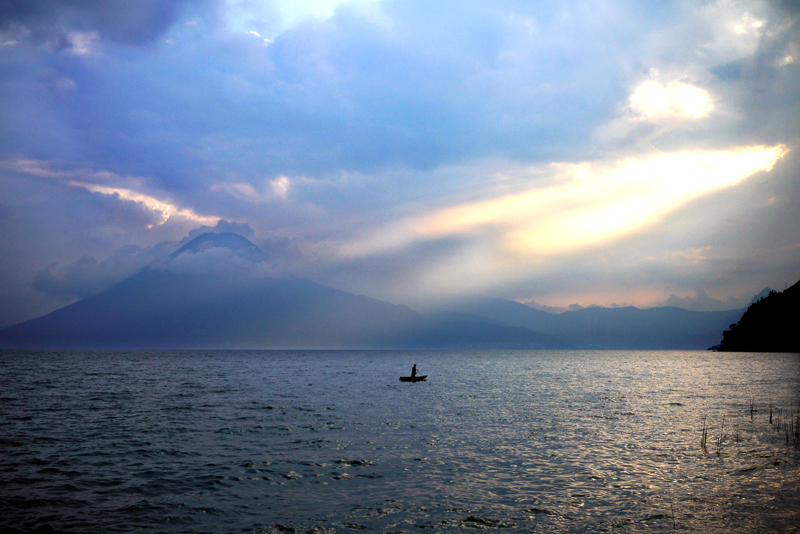
 There are slippery boardwalks where once there was beach and the water itself has a different look. It is very clear right now and a steel blue but seems somehow heavier, fuller and wetter in its very nature, not just in its volume. It is shinier, more reflective on its surface and yet ever more guarded of its depths. Every afternoon, as always, the wind called the Chocomil blows in from the Pacific, turning what at morning is a near mercury-smoothness into tumult. But in years past there were heavy waves, the kind which are bone-jarring to travel over in the lanchas, the local water-taxi speed-boats, but which a captain could judge and drive expertly through. Now the Chocomil raises a rough chop, an irregular and unpredictable waveform of angry spikes with no rhythm. The whole surface becomes a changing field of liquid triangles in which the outboard motor finds irregular purchase. Making headway is difficult and the over laden lanchas roll dangerously from side to side.
 My more liberal friends blame Global Warming, sorry, Climate Change, for this as they blame every snowstorm, tornado, drought and soft summer rain. My mother says, “We used to call it weather, and weather is always strange.†I for one know a fair bit about photography and film, history, literature, politics and a few other subjects. I know very little about the weather though I do know enough to stay out of the rain or to fly a kite in a thunderstorm. What I do know is that the lake is changing. There are places I once walked that are now underwater. My favorite hostal is still a lovely, welcoming place but it has outgrown is rustic, ramshackle and wonderfully intimate beginnings. On this trip I have talked to more travelers from Ohio and Illinois than to supercilious Dutchmen, crazed Israelis on leave from the IDF and Swedes drunk on sunlight, affordable beer and emotional freedom.
But at sunset I sat with an old and good friend, Juan Carlos, the man who first introduced me to Atitlan and to Santa Cruz, and his girlfriend. They both live in Brooklyn and I hadn’t seen Juan in more than ten years. We happened to be both in Guatemala again at the same time. We talked of politics and life and mostly agreed. When we disagreed we did so as gentlemen and ladies of goodwill, interested not in proving our own point but in search of our elusive mistress named truth.
 The sun sank below the rim of the caldera and beams of light flooded the sky, difused and diffracted by the clouds and the angle. They fell on the gunmetal water to illuminate a lone fisherman paddling his canoe home. My friends were leaving the lake in the morning and we said our goodbyes, resolved to meet again sooner, offered up our homes in Columbus and Brooklyn to visits. I walked back to the Lost Iguana in the black night with the lake sloshing and spraying under my feet. I was alone and missed my wife. It was time to move in the morning. Paradise had changed and so had I.
Post a Comment